What radon mitigation involves in a Mansfield house
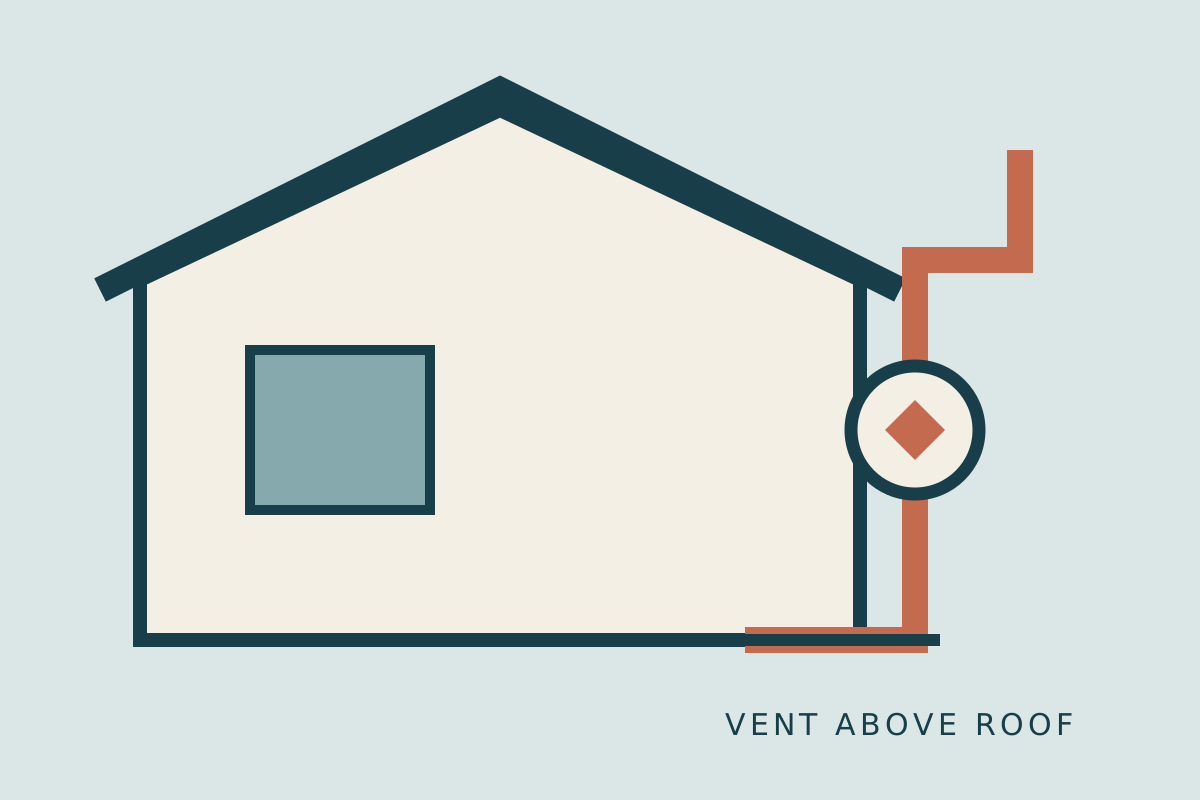
If your house tested at 4 pCi/L or higher, the fix is almost always a pipe and a fan that pull radon from under the slab and vent it above the roof.
How a system works
The standard method is called sub-slab depressurization. The name sounds fancier than the job.
An installer drills a hole through the basement slab and digs out a small pit underneath, called the suction point. A PVC pipe runs from that pit up and out of the house. An in-line fan on the pipe pulls a steady vacuum on the soil under the slab, so radon goes into the pipe instead of up through the floor. The pipe discharges above the roof edge, where the gas thins out into outside air.
A small U-shaped gauge on the pipe, called a manometer, shows the fan is pulling. If the liquid in both sides is level, something’s wrong.
What goes into a good install
These are the judgment calls that separate a clean job from a sloppy one.
- Suction point location. A pro often runs a quick test first to see how air moves under the slab. Some houses need more than one point.
- Fan outside the living space. The fan goes in the attic, the garage, or on the outside wall. Never in a basement or any room you live in, because a leak on the pushing side of the fan puts radon right back in the house.
- Discharge above the roof. The pipe should vent above the roof edge and away from windows, doors, and a neighbor’s windows.
- Sealing. The installer seals the sump lid, open cracks, and the gap around the pipe where it goes through the slab.
- Labeling. The pipe should be labeled as a radon system so a future owner or plumber doesn’t cut into it.
Basements, crawlspaces, and older foundations
A full basement makes sub-slab work straightforward, and plenty of houses around here have one. Two situations change the plan.
A crawlspace usually gets a heavy plastic sheet laid over the dirt and sealed at the walls, with the suction pipe pulling from under the sheet.
An older house on a fieldstone or rubble foundation can leak air through the walls, not just the floor. That can take more sealing, more suction points, or a stronger fan.
What affects the price
We won’t quote numbers here, because prices change and every house is different. What drives the cost:
- How many suction points the house needs
- Where the pipe can run (through the house, up the outside, or through the garage)
- Whether there’s a crawlspace or a mixed foundation
- Whether an electrician needs to add a circuit for the fan
- How much sealing the foundation needs
Get at least two quotes, and ask each installer how they’d route the pipe and where the fan would go.
The retest
A system isn’t done until it’s tested. Ask for a follow-up test after the fan has been running, and keep the result with your house papers. If you ever sell, a buyer will want to see it. Test again every couple of years after that, and after any big change like finishing the basement.
Start by finding a certified radon mitigator on the state’s list, or head back to the Mansfield radon guide.
Mitigation questions
How long does an install take?
Most single-family systems go in within a day. Houses with more than one foundation type, like a basement plus a crawlspace addition, can take longer.
Will I hear the fan?
A properly mounted fan outside the living space makes a low hum at most. Loud vibration usually means a mounting problem the installer should fix.
Does a system need maintenance?
Check the manometer on the pipe every so often. Fans run nonstop and eventually wear out. Retest every couple of years and after any big renovation.
Can I just seal the cracks?
Sealing helps a system work better, but sealing alone rarely brings a high house under 4 pCi/L. EPA doesn't recommend it as a standalone fix.
- We don't sell tests or install systems
- Every figure links to its source
- Built on Massachusetts DPH and EPA guidance